
Open Enrollment Explained
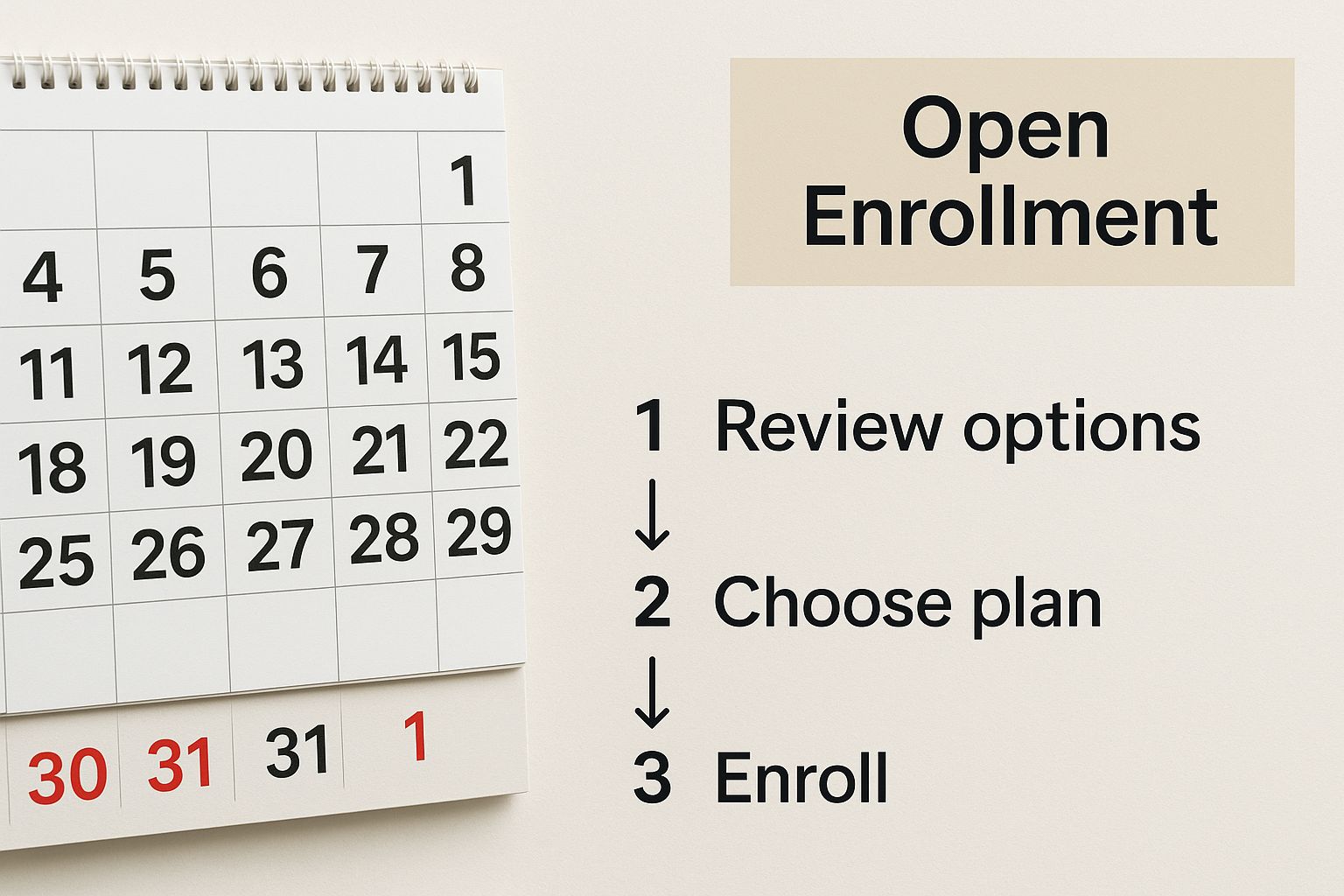
At its core, Open Enrollment is the once-a-year window to select, adjust, or cancel health coverage and related benefits. For high-net-worth individuals and family offices, it’s not a routine task—it’s a decisive financial planning milestone. During this defined period, you can secure new plans, refine existing coverage, or opt out entirely, shaping your healthcare and fiscal exposure for the next twelve months.
What Is Open Enrollment?
Imagine the health insurance market lining up offerings on a fixed date, much like a major IPO launch. Once the window closes, your ability to make changes is confined—except for specific life events. Consolidating enrollment into a narrow timeframe helps insurers stabilize premium rates and manage adverse selection, ensuring the pool’s risk remains balanced.
Open Enrollment at a Glance
| Attribute | Description |
|---|---|
| Timing | Annual dates set by employer, insurer, or government marketplace (varies by region and plan type) |
| Purpose | Enroll, modify, or cancel benefit plans for the upcoming policy year |
| Eligibility | Active employees, retirees, and individuals purchasing through government exchanges or private plans |
| Change Restrictions | Outside the window, only Qualifying Life Events (QLEs) permit midyear adjustments |
| Risk Management | Mitigates adverse selection and maintains stable risk pools |
Impact of a Fixed Timeline
Once the designated enrollment window ends, your coverage selections are locked in—barring a Qualifying Life Event (QLE) such as marriage, birth, or job change. Missing this deadline can leave you underinsured or facing unexpected out-of-pocket expenses. Treat Open Enrollment as a critical checkpoint: assess, compare, and consult your advisor to align benefits with your net worth and lifestyle.
Navigating Midyear Changes
Outside the annual window, only a limited set of life changes trigger a Special Enrollment Period (SEP). Common QLEs include:
- Marriage, divorce, or legal separation
- Birth, adoption, or placement of a child
- Loss of other health coverage (e.g., job termination, aging off a parent’s plan)
- Permanent relocation to a new service area
Keep documentation—marriage license, birth certificate, proof of address—handy to validate any QLE and secure your SEP without delay.
How the Open Enrollment Process Functions
Open Enrollment is a core component of corporate financial planning. According to the Society for Human Resource Management’s 2023 Employee Benefits Survey, approximately 77% of U.S. employers initiate enrollment in October (34%) or November (43%), aligning plan effective dates with the calendar year. Nearly all (99%) single-employer group plans maintain a formal annual enrollment period to comply with federal regulations like the Affordable Care Act (ACA).

The Corporate Perspective on Enrollment
From an organizational standpoint, Open Enrollment is an operational and fiscal undertaking. Companies allocate significant resources to communications—49% of organizations designate a dedicated budget for benefits education, and 12% increase that budget year over year—to ensure executives and staff understand their options. A robust enrollment strategy reduces compliance risk, enhances retention, and underscores the value of your benefits package.
For precise definitions of key policy terms, consult our guide on how to decipher your expat medical insurance policy terms.
Where You Shop Matters: Navigating the Different Enrollment Markets
For individuals with global assets or expatriate status, choosing the right enrollment market is integral to wealth preservation. Open Enrollment processes differ markedly across:
- Employer-sponsored plans
- Government marketplaces
- Private international medical insurance

The Role of Government Marketplaces
Under the ACA, the federal and state exchanges provide a structured annual Open Enrollment. For 2025 coverage, nearly 4.4 million existing enrollees actively renewed plans after November 1, while about 988 000 new consumers enrolled, according to the national enrollment snapshot. Automatic renewals safeguard against coverage lapses, but you should always review plan changes and subsidy eligibility annually.
What About Private and International Insurance?
Domestic plans often lack the flexibility and global network that ultra-affluent clients require. International private medical insurance (IPMI) delivers unrestricted access to premier providers worldwide, with enrollment windows that frequently extend year-round—ideal for expatriates, corporate executives, and family offices. For an in-depth overview, explore our international private medical insurance guide.
A Global Perspective on Health Benefits
When your operations or lifestyle span 150+ countries, a U.S.-centric benefits model falls short. Multinational corporations must integrate local regulations and cultural expectations into a cohesive global benefits framework. Unlike the rigid annual enrollment of U.S. plans, many leading international insurers permit continuous enrollment, reflecting the unpredictable timing of relocations and executive assignments.
Learn more about flexible global enrollment on remotepeople.com.
What If I Miss the Open Enrollment Window?
Missing the annual deadline without a QLE means you remain in your existing plan until the next cycle. A Qualifying Life Event triggers a Special Enrollment Period (SEP), typically 30–60 days long, during which you can:
| Qualifying Life Event | SEP Window |
|---|---|
| Getting married | 60 days from date |
| Birth, adoption, or foster placement of a child | 60 days from date |
| Losing other health coverage (job change, aging off plan) | 60 days from date |
| Divorce, legal separation with loss of coverage | 60 days from date |
| Permanent relocation outside current plan service area | 60 days from date |
Act promptly: insurers require proof of the event (e.g., marriage certificate, birth record, proof of address) before approving any midyear changes.
Optimizing Your Open Enrollment Decisions
Approach Open Enrollment as your annual healthcare and financial audit. Treat each plan component—network access, specialty tiering, premiums versus out-of-pocket maximums—as an asset allocation exercise. Key considerations:
- Access to Premier Networks: Verify top-tier hospitals and specialists are in-network to avoid substantial out-of-network bills.
- Specialty Drug Tiering: Confirm your essential medications’ formulary tiers to prevent sudden cost increases.
- Premium vs. Out-of-Pocket Trade-off: Model best- and worst-case scenarios to determine the optimal balance.
- Household Coordination: Align each family member’s plan benefits to accelerate deductible satisfaction and maximize network coverage.
Project your 12-month medical needs—planned procedures, routine specialists—and calibrate your Health Savings Account (HSA) contributions to match your deductible, optimizing the tax advantage.
Draft Your Yearly Action Plan
Pin your Open Enrollment dates to your financial calendar alongside tax deadlines and investment reviews. Schedule a meeting with your benefits advisor or wealth manager to analyze scenarios. Understanding how to define health insurance premium amounts is essential. Once your plan is active, streamline claims management by reviewing pre-authorisation and direct settlement.
Open Enrollment is not a passive obligation—it’s a strategic instrument to safeguard your health and financial well-being. Challenge last year’s selections annually to ensure they remain aligned with your evolving lifestyle and risk profile.
Frequently Asked Questions
What Happens If I Miss the Deadline?
Once Open Enrollment closes, you’re committed to your current plan until the next cycle, unless a Qualifying Life Event triggers an SEP. Missing the deadline can expose you to coverage gaps and unexpected medical bills.
How Do I Prepare for Open Enrollment?
Review last year’s claims and out-of-pocket expenses. Forecast any family changes, elective procedures, or relocations. Use decision tools or engage a benefits advisor to quantify each plan’s financial impact.
How Do I Choose Between HMO, PPO, and HDHP?
- HMO: Lower premiums, in-network only
- PPO: Out-of-network flexibility, higher cost share
- HDHP: Lower premiums, higher deductible, HSA-eligible
Assess cost predictability, provider access, and long-term savings in the context of your health projections and wealth strategy.
Choose Riviera Expat for tailored guidance on global health coverage and elite private medical insurance solutions. Riviera Expat